
the Spirit of the Château
the History of Château de Labro
The Contemporary History of Château de Labro
From rebirth to soul: the story of a place (2001–today)
Since 2024: a handover, a living continuity
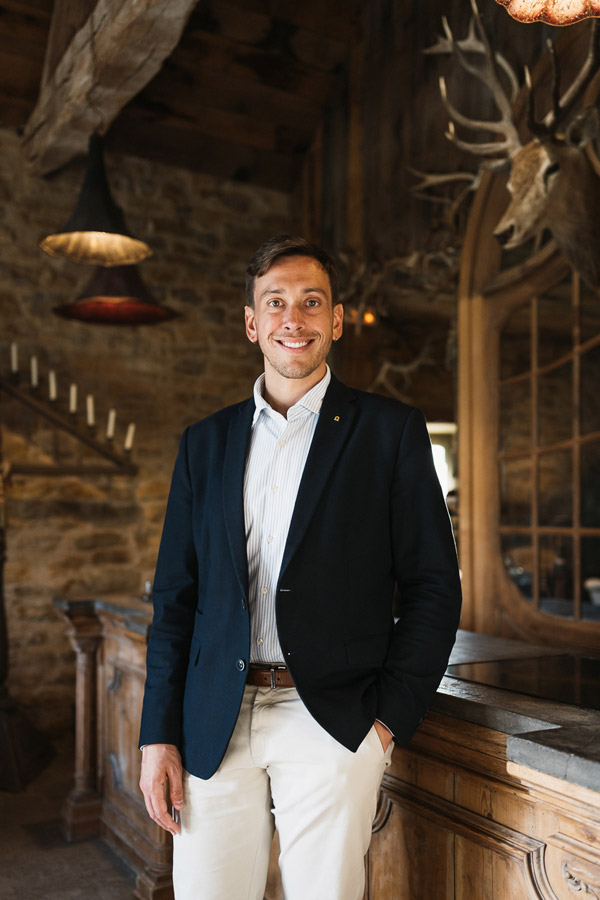
In 2024, a new chapter begins—without ever turning its back on history. Rémi Nabaillès takes up the torch at Château de Labro, guided by a spirit of continuity and respect.
His journey is deeply intertwined with the place itself. After training in hospitality and gastronomy, enriched by several years of travel abroad, Rémi joined Château de Labro in 2016 as a receptionist. He quickly progressed, ultimately becoming Operations Director alongside Jean-Michel Rouquet.
This immersion, at the very heart of the house, shaped his vision: a form of hospitality that is exacting, human, and sincere.
After a Parisian experience alongside the Bras family, he naturally returned to Labro, drawn back by the place itself and by the trust of the Rouquet family. The handover unfolded with ease, guided by a shared conviction: to preserve the soul of the château while allowing it to grow.
Labro today: a living house, looking to the future
Today, Château de Labro stands at once as heritage and vision. Rémi Nabaillès lives and works there, investing his energy day after day. His ambition: to make Labro a destination in its own right—one people come to as much for the place itself as for the experience it offers.
Excellence is constant, never ostentatious. Modern comfort is integrated with discretion, the heritage is respected, and hospitality remains at the heart of everything. Here, clients are guests, but welcomed with warmth by a loyal and deeply committed team.
Labro continues to evolve, imagining new experiences, without ever losing what defines its essence: a lived-in house, a place of renewal, and a way of life passed down from one generation to the next.
And as the vines of Clos Labro continue their seasonal cycle, one certainty remains: the story of Château de Labro is always being written in the present.
2001–2024: the Rouquet family’s vision of rebirth
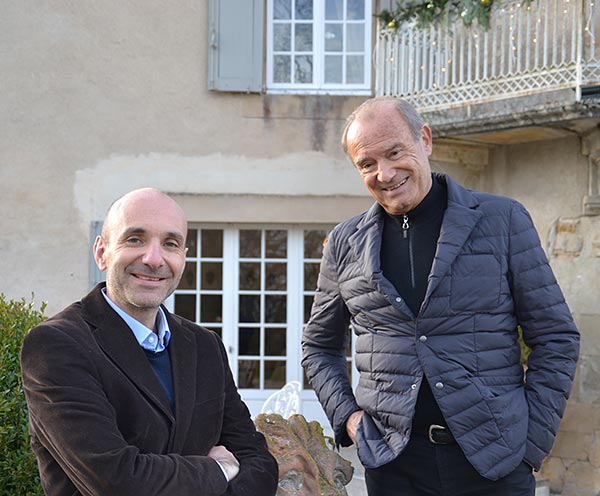
In 2001, Jean and Nizou Rouquet fell under the spell of Château de Labro. The place was then dormant, almost forgotten. Yet they chose to commit to it fully, undertaking extensive restoration work to bring it back to life—stone by stone, object by object. For them, it was also a return to their roots, in their native region, and the beginning of a deeply human journey.
Very quickly, Jean Rouquet chose to open the estate to the public. His ambition was not to create a conventional hotel, but a place to be shared—a lived-in house driven by the desire to welcome, to inspire, and to pass on emotion.
A passionate antiques dealer and a true aesthete, he shaped a singular world where curated finds, decorative boldness, and timeless elegance come together. Each room tells a story; every detail contributes to that rare sensation: time standing still.
His son, Jean-Michel Rouquet, then takes over. He oversees the marketing and development of Château de Labro, continually raising the standard of its offerings while ensuring that the original spirit envisioned by his father is preserved. Together, they establish Labro as a place apart, renowned for its sincere charm and its art of hospitality.
As Périco Légasse wrote, Labro thus became «a sanctuary of the art of living, a haven devoted to well-being, beauty, and the gentle pleasure of being».
The Story of the Estate
Château de Labro, a residence shaped by the centuries
Just a few kilometres from Rodez, Château de Labro has been part of the Aveyron landscape for over five centuries. Its history is that of a place of passage, work, and life—constantly evolving through the ages.
Origins: a Renaissance château (16th century)
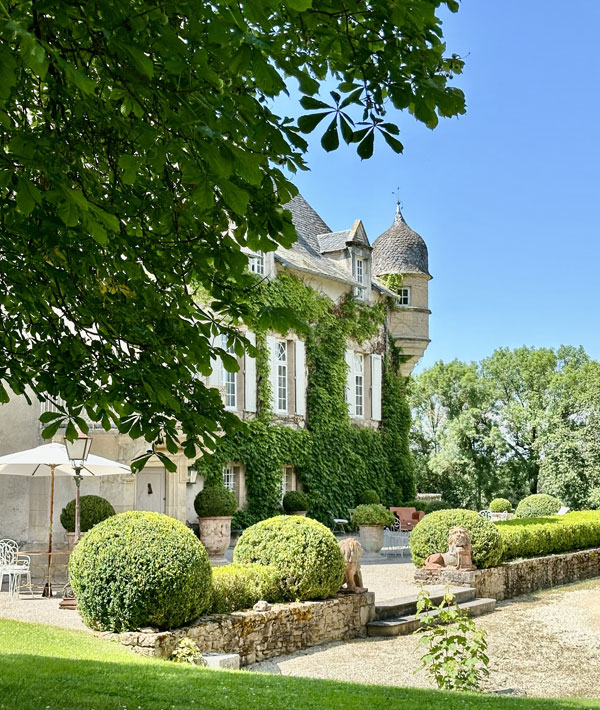
The château was built in the early 16th century, as evidenced by the date 1519 carved into the stone of its tower. Commissioned by Antoine de Créato, Lord of Labro, the building originally followed an L-shaped layout, typical of Renaissance seigneurial residences in the Rouergue region.
The stair tower, mullioned windows, and certain sculpted details still visible today bear witness to this original construction.
From the outset, Labro was not a military fortress but a noble residence rooted in agricultural life, set at the crossroads of ancient routes, including the famed draye linking Aubrac to Quercy.
From the 17th to the 18th century: a living agricultural estate
Through successive inheritances and sales, the château changed hands while preserving its rural vocation. It became a vast livestock estate, structured around courtyards, stables, barns, a walled garden, a bakehouse, and a dovecote.
Historic texts describe a lively place, organised around daily life, the work of the land, and the welcoming of farmers. The architecture gradually evolved—some parts were reworked, others disappeared—yet the ensemble retained its deep connection to the surrounding landscape.
The great transformation of the 19th century
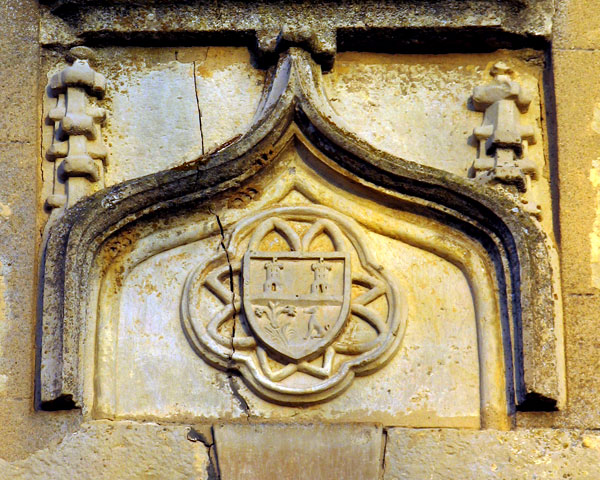
At the beginning of the 19th century, the château underwent its most significant transformation under the direction of Pierre-Louis-Joseph Maynier, then owner of the estate. It was during this period that the residence took on its present appearance, becoming more symmetrical, with the removal of an earlier wing and the addition of emblematic decorative features: a balcony, new openings, turrets, and the family coat of arms still visible today. This transformation gave Château de Labro its elegance and balance, while affirming its status as a residence of character.
A living heritage
If Château de Labro has stood the test of time, it is because it has known how to adapt. A seigneurial residence, an agricultural estate, then a reinvented place to live, it now bears the visible traces of every era it has crossed: the Renaissance, the Ancien Régime, and the 19th century. This architectural and historical layering makes Labro a singular place, where heritage is not frozen in time, but continuously lived in, passed on, and enhanced.